
Last updated November 22, 2026
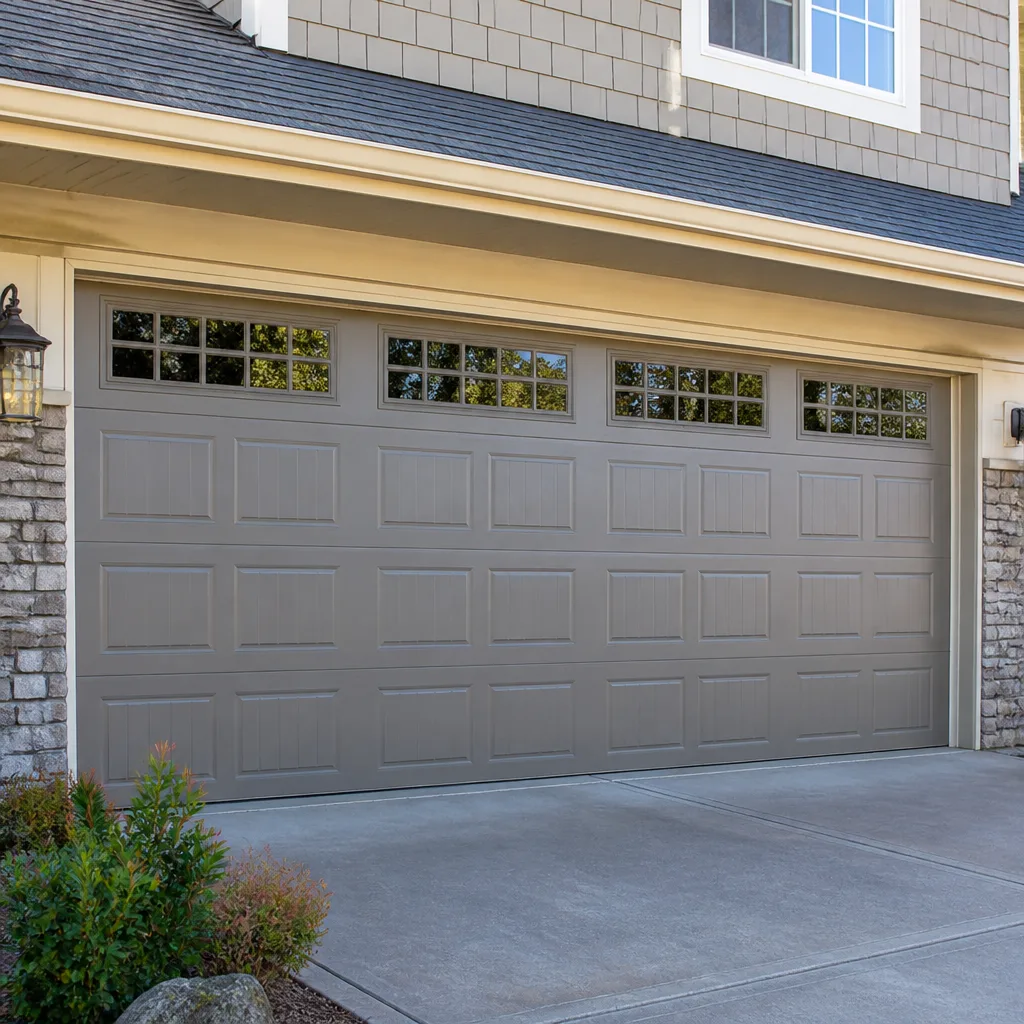 Raised-panel steel
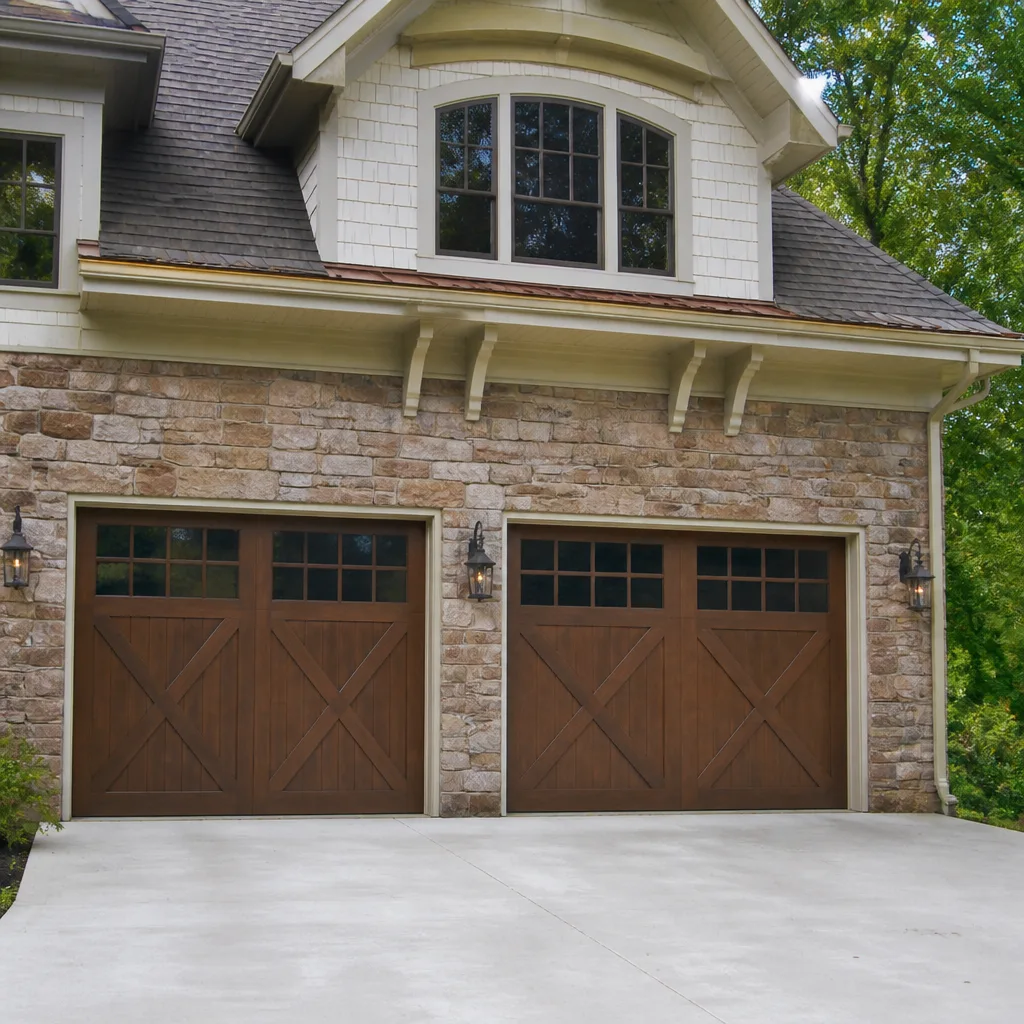 Carriage house
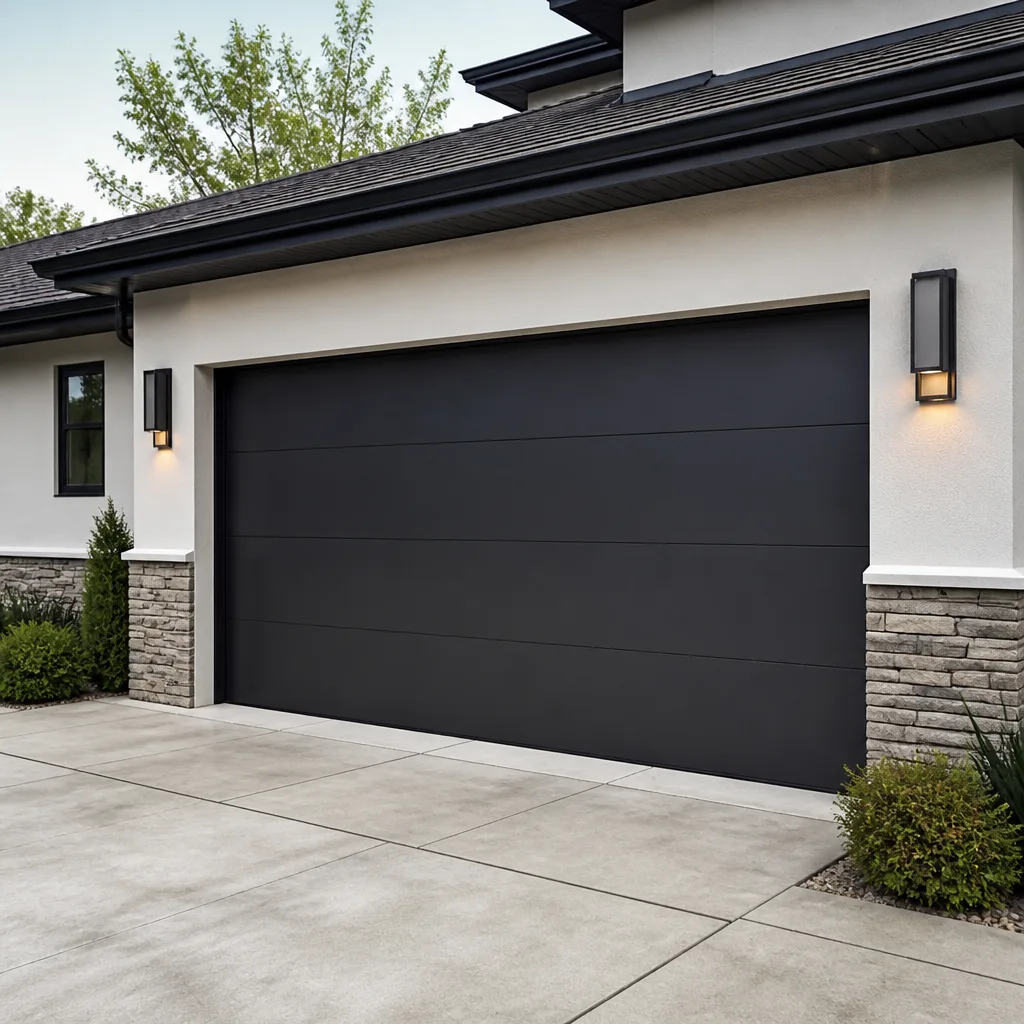 Modern flush
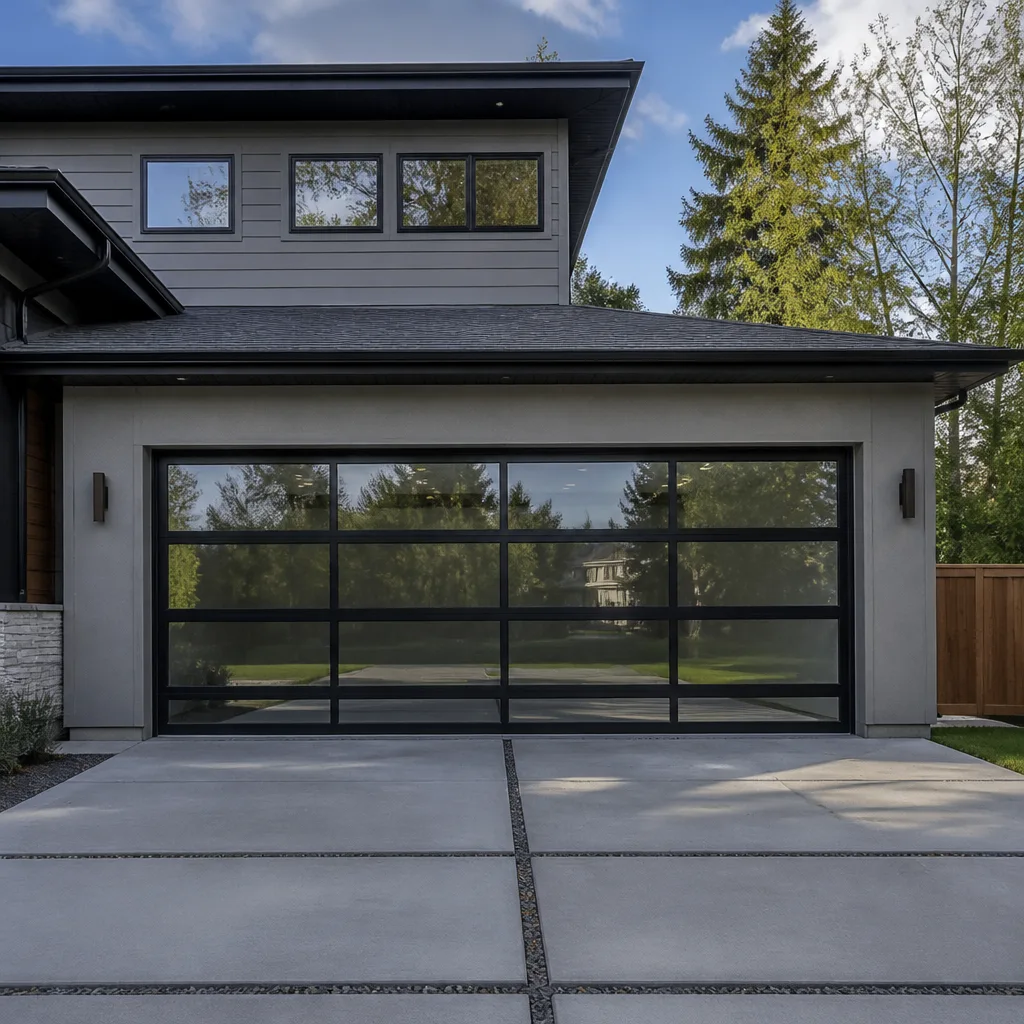 Full-view glass
 LiftMaster openers
 Chamberlain openers
Full 25-point door and opener safety check with every visit - springs, cables, rollers, tracks, and your LiftMaster or Chamberlain opener included
You get a price before we start. It does not change when the pro arrives.
Get your free estimateGarage Door Warning Signs: A Longmont Homeowner’s Reference Guide
A slow garage door is annoying. A slow garage door that grinds on one side and shudders on the way down is a different animal entirely, and treating both as “the door’s getting old” is how a cheap adjustment turns into a snapped cable. Most warning signs people worry about are harmless for another month. A few are the last warning you get before something fails hard. The difference isn’t obvious from the driveway, which is why we built this reference around triage instead of a symptom list: what to watch, what to schedule, and what to stop using right now. Longmont homeowners get a framework, not a guess.
Quick Answer
Garage door warning signs fall into three tiers: keep using with caution (noise, sluggishness, minor vibration), schedule this week (loose hardware, seal gaps, opener strain, an unbalanced door), and stop using immediately (a broken spring, a snapped or frayed cable, a door that’s come off one track, or a door that reverses on its own). Anything in the third tier is a safety issue, not a repair decision. Stop operating the door and call for service before you touch anything.
Styles & brands we work with
- Raised-panel steel
- Carriage house
- Modern flush
- Full-view glass
- LiftMaster openers
- Chamberlain openers
Table of Contents
- The Three-Tier Triage System: Watch It, Book It, Stop
- How to Tell Spring Sounds From Opener Sounds From Cable Sounds
- Visual Inspection: What to Look For on the Door Itself
- Cold Mornings in Longmont: Temperature Sluggishness or Mechanical Failure?
- The Balance Test: How to Check an Unbalanced Door Safely
- Opener Warning Signs Most Homeowners Miss
- Seal Gaps and Front Range Wind: Small Gaps That Cause Real Damage
- When to Call a Professional
The Three-Tier Triage System: Watch It, Book It, Stop
The single most useful thing you can learn about your garage door is which warning signs allow you to keep living your life and which ones mean the door is done until someone with tools arrives. We sort every symptom we hear into three tiers, and so should you. The tier isn’t about how annoying the problem is. It’s about whether continuing to run the door can hurt someone or make the repair bigger.
Tier One: Keep Using With Caution
These are early signals. The door still works, nothing is at risk of failing today, but something changed and it’s worth a look soon.
- A faint rattle that wasn’t there a few months ago
- Slight vibration on the way up or down
- One roller that squeaks on a dry hinge
- The door hesitating for a split second before it moves
Tier Two: Schedule This Week
You can operate the door, but stop putting it off. These problems tend to grow, and they grow fastest in a Longmont winter.
- Hardware that’s visibly loose on the hinges or track brackets
- A bottom seal with daylight showing through
- The opener straining or sounding louder than usual
- A door that’s noticeably heavier to lift by hand than it should be
- Rust streaks forming along seams or at the bottom edge
Tier Three: Stop Using Immediately
This is where a warning sign becomes a hazard. Do not run the door. Do not try to “see if it’ll make it one more time.”
- A loud bang followed by a door that only opens a foot or two
- A door hanging crooked or off one side of its track
- Any door that reverses without warning when closing on an object
- A spring you can see is broken (a clear gap in the coil)
- A cable that’s frayed, tangled, or hanging loose
We categorize every call this way before we quote anything, because a tier-one squeak and a tier-three broken spring involve completely different work. That’s the value of knowing the difference yourself.
How to Tell Spring Sounds From Opener Sounds From Cable Sounds
About a third of the calls we take start the same way: “It’s making a noise, I don’t know where it’s coming from.” Homeowners aren’t wrong to be worried. Springs, opener motors, and lift cables all produce sounds, and the sound tells you which of the three is failing. Here’s how to sort them out without getting on a ladder.
Spring Sounds
Torsion springs sit on a bar above the door. When one lets go, it’s not subtle. The classic description is a sharp, loud bang – like a heavy book dropped flat – followed by the door going suddenly dead or only lifting a foot. The bang is the sound of a frozen spring snapping. What you’ll notice afterward: the door feels far heavier than it used to, and the opener may run but not move the door. Any bang followed by a door that won’t lift is a stop-using call.
Extension springs along the side of the door are lower-pitched and tend to creak or twang more than they bang. Either way, springs are high-tension parts. This isn’t something to diagnose from the Internet or handle without training. If you suspect a spring, keep your hands off it and book a technician.
Opener Motor Sounds
Opener noise comes from the unit on the ceiling, not the door itself. A straining opener sounds like a motor laboring or grinding under load. A worn gear sounds like a whine that speeds up and slows down. A chirpy opener usually means worn sprockets or a dry belt on a belt-drive unit. The tell: opener noises happen at the unit. If you stand in the middle of the garage and the sound is up and behind you, it’s the opener.
Cable Sounds
Cables run from the drum at the top down the sides to the bottom bracket. A failing cable often makes a grinding or scraping sound on one side only, the side where the cable is slipping. Sometimes the whole door shudders on that side. It’s a sharper, more metallic sound than a squeaky roller, and it usually localizes to one corner. A grinding on one side with a shuddering door is a cable you should treat as about to fail.
Visual Inspection: What to Look For on the Door Itself
Sound tells you what’s wrong right now. Visual checks tell you what’s about to go wrong. Spend two minutes a month walking around all four sides of your door and you’ll catch most of these before they turn into a repair you can’t schedule.
- Panel stress cracks. Look at the folds and seams at the corners of each section. Hairline cracks that run along a fold or radiate from a corner suggest the panel is flexing more than it should – often the result of an overhead mechanism that’s out of balance or an impact from a car. A cracked panel weakens the door’s structure with each cycle.
- Rust patterns. Rust that runs down the seams and along the bottom trim means moisture is sitting where it shouldn’t. In Longmont, a lot of that comes from meltwater pooling at the threshold in the cold months. Rust flakes on the bottom edge of a steel door often precede panel failure by a season.
- Bottom seal gaps. After dark, shine a flashlight at the floor from outside. Any light between the bottom seal and the floor is a gap – a windshield for wind-driven Front Range snow and rain, and a doorway for field mice. Look for the seal sagging or split along the bottom trim.
- Roller wear. Rollers should turn freely on their stems. A flattened or wobbly roller rides rough in the track and can hop out. Check them by eye from the side, not by feel.
- Track alignment. Tracks should be straight and parallel. Any visible dent or bow along the run of the horizontal track above the door is a problem that will warp the door panels it guides.
- Loose brackets and hinge screws. Grab a hinge leaf (not the springs) and give it a gentle wiggle. If the hinge is loose, the panel is being carried by fewer points than it should be.
Any crack or rust found in a visual check is worth a call sooner rather than later, even if the door still operates. Fixing a small panel problem is far easier than replacing a section of a Clopay or Amarr door once the damage has spread.
Cold Mornings in Longmont: Temperature Sluggishness or Mechanical Failure?
Longmont sits high and cold for a good chunk of the year, and the first hard freeze of the season usually brings a wave of “my door froze” calls. Some of those are genuine temperature sluggishness. Others are a mechanical problem the cold made visible. Both look the same from the driver’s seat, and treating them the same is how a small mechanical issue becomes a winter breakdown.
What Cold Weather Actually Does
Cold weather thickens the lubricant in the door’s moving parts and makes metal parts stiff. A door that’s well-maintained will feel a little sluggish on a sub-freezing morning. That sluggishness should resolve after the first full open-close cycle. If it does, the door’s fine. The cold just got its attention.
When Sluggishness Isn’t Temperature
These signals say the problem is mechanical, not thermal:
- The door stays sluggish all day, no matter how many times you run it
- The opener sounds like it’s straining on warm days too, not just cold ones
- The door hesitates in the same spot each time – halfway up, or just as it starts down
- The door balks at a specific cold-morning temperature but works fine by noon
- You hear grinding or a clunk, not a creak
Cold-morning sluggishness is mostly a lubrication and adjustment conversation. Persistent sluggishness that doesn’t improve is a spring, roller, or opener conversation. A Genie or Wayne Dalton opener that strains in the cold but runs fine on a warm day is usually being asked to move more door weight than its springs are helping with. That’s a mechanical balance issue, not a motor issue. You can read more about our diagnostic approach on our garage door opener repair page.
The Balance Test: How to Check an Unbalanced Door Safely
An unbalanced door is the most underestimated problem in the trade. Springs and cables can look perfect while the door is quietly asking the opener to do twice the work it’s built for. A door that’s out of balance wears out openers fast, stresses cables and rollers, and dangerously accelerates on the way down if a spring lets go. The fix is an adjustment – but only if you know the door’s out of balance.
How to Run the Balance Test
You can do this yourself, safely, in about a minute. Do not do this if the door is visibly hanging crooked, off its tracks, or has a suspected broken spring – those doors are for a technician, not a balance test.
- Close the door fully and disconnect the opener by pulling the red release handle, so the door is in manual mode.
- Lift the door by hand (or by the bottom section handle, never the spring assembly) until it’s about halfway open.
- Let go and step back. The door should stay put, or creep only slightly, on its own.
- Lift the door to about chest height and repeat. Same expectation.
- Lower the door to about knee height and repeat.
What a Failing Result Looks Like
A balanced door sits where you leave it. A failing door does one of three things:
- It slides down slowly when released at mid-height – the springs have lost tension on the lift side
- It sinks or slams down faster than it should at any open position – the spring tension is way off, or a spring is broken
- It tries to ride up on its own when you’re not lifting it – the springs are over-tensioned
Any of those results means the door needs an adjustment before it cycles again. Reconnect the opener only after the door has been adjusted, and don’t try to dial in spring tension yourself. Springs are a safety issue, not a repair. If your balance test fails, that’s a stop-using-immediately call.
Opener Warning Signs Most Homeowners Miss
The opener is the part of the system people notice last, because it runs quietly and out of sight. When it finally fails, it usually does so after months of warnings that were dismissed as “normal noise.” We service openers from LiftMaster, Chamberlain, Genie, and Craftsman, and the warning signs are the same across all of them.
Opener Warning Signs
- Straining under load. The motor’s pitch changes noticeably when the door hits a certain point. That’s an opener working against a door it shouldn’t have to fight.
- Sluggish first cycle after sitting. If the door hesitates after the door has sat closed overnight but runs fine on later cycles, the opener’s gear or belt is past its prime.
- Inconsistent reversing. If your door reverses on the way down for no apparent reason, the safety sensors or the opener’s travel limits are out of adjustment.
- The red light on the opener blinks codes. Every major opener brand blinks a diagnostic code. If yours is, look it up in the manual – it’s telling you something.
- Remote range dropping. If a remote works from 10 feet but not from the driveway, the opener’s logic board or antenna is weakening.
- The wall button works but the remotes don’t (or vice versa). That’s a control-board problem, not a door problem.
A door that’s out of balance puts far more strain on the opener than any age of motor should ever see. That’s why we test balance before we recommend a new opener – replacing the motor without addressing the door is money spent twice. Our team handles the full opener diagnosis and repair on our garage door repair page for Longmont.
Seal Gaps and Front Range Wind: Small Gaps That Cause Real Damage
Longmont’s wind doesn’t respect a loose bottom seal. Front Range wind gusts push snow and rain sideways against doors in a way that makes the bottom seal one of the most-used parts of the whole system. A gap of a quarter inch looks minor on a calm day and becomes a snow injection port on a gusty one.
What a Seal Gap Costs You Over Time
- Meltwater creeping under the door and sitting against the bottom of the door panels
- Cold air leaking into the garage and the room above it
- Field mice coming in through a gap nobody noticed
- Dirt and grit riding in on the wheels and floor, wearing the seal faster
- Wind-driven debris that lodges against the door’s weatherstrip and tears it
Most seal gaps close with a straightforward seal replacement. It’s a small job compared to what a rusted-out bottom panel runs, and it’s the kind of thing we can swap out without touching the springs or the opener. A Clopay or Amarr door with a new bottom seal sits tighter against the floor and stops the meltwater creep before it gets into the frame.
How to Spot a Gap
Close the door and look at the threshold from the outside. Any visible light is a gap. Any part of the seal that hangs loose, splits, or has a hole in it needs to go. If the floor itself dips or bells up, the seal can’t close flush and the whole assembly needs a different fix.
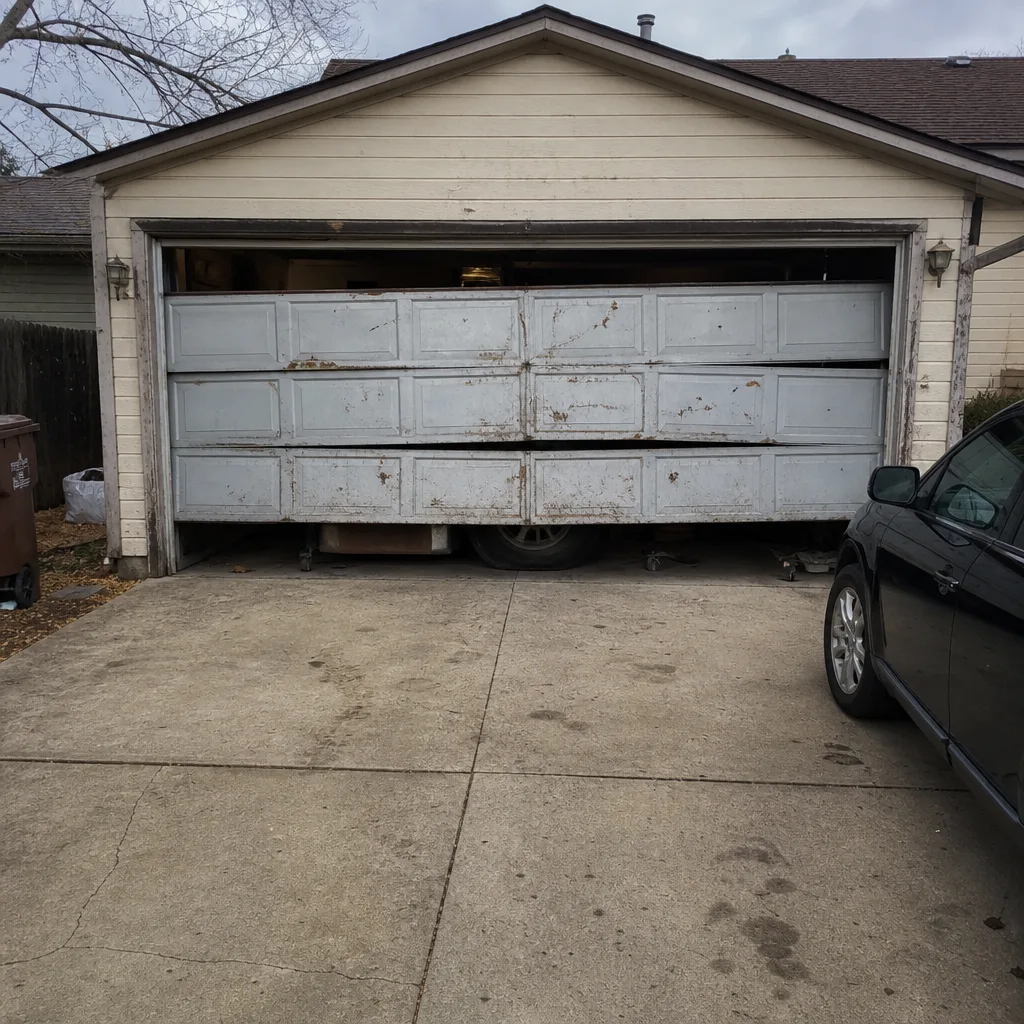
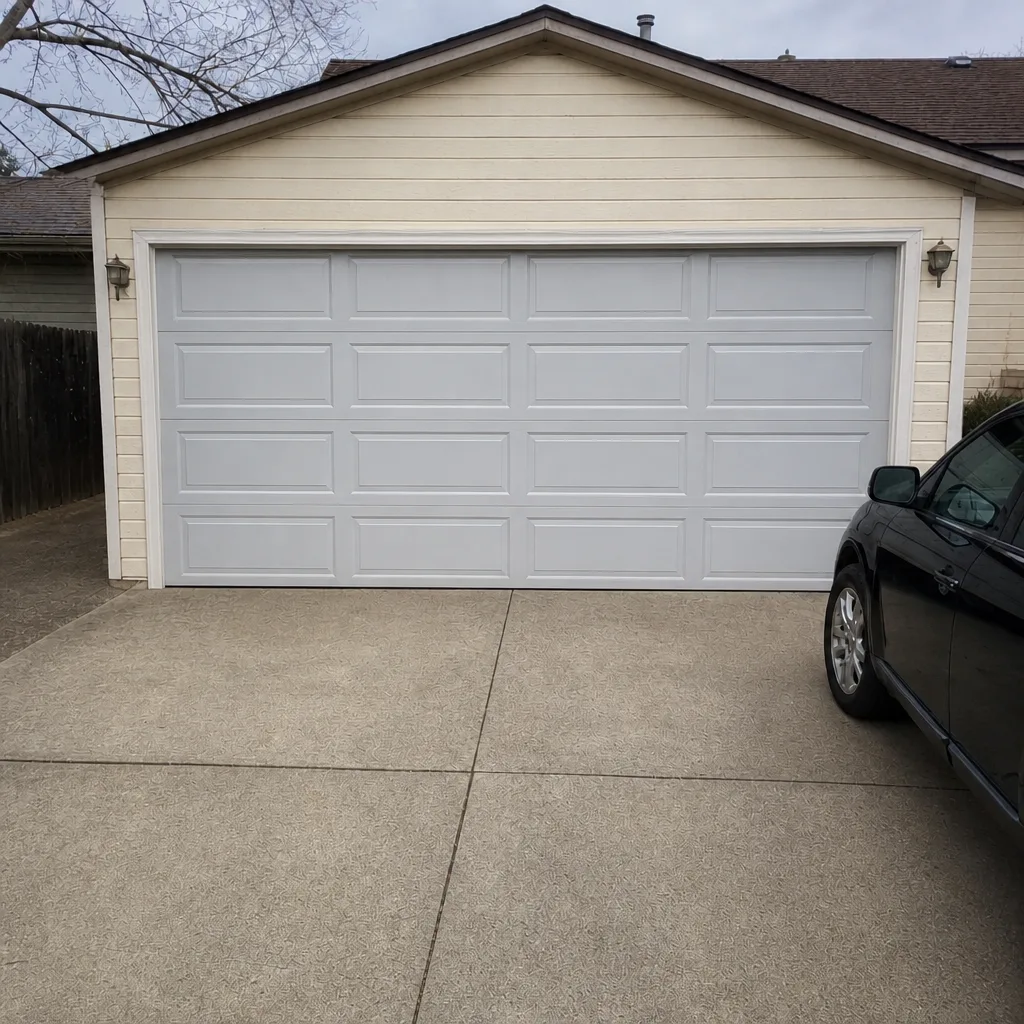
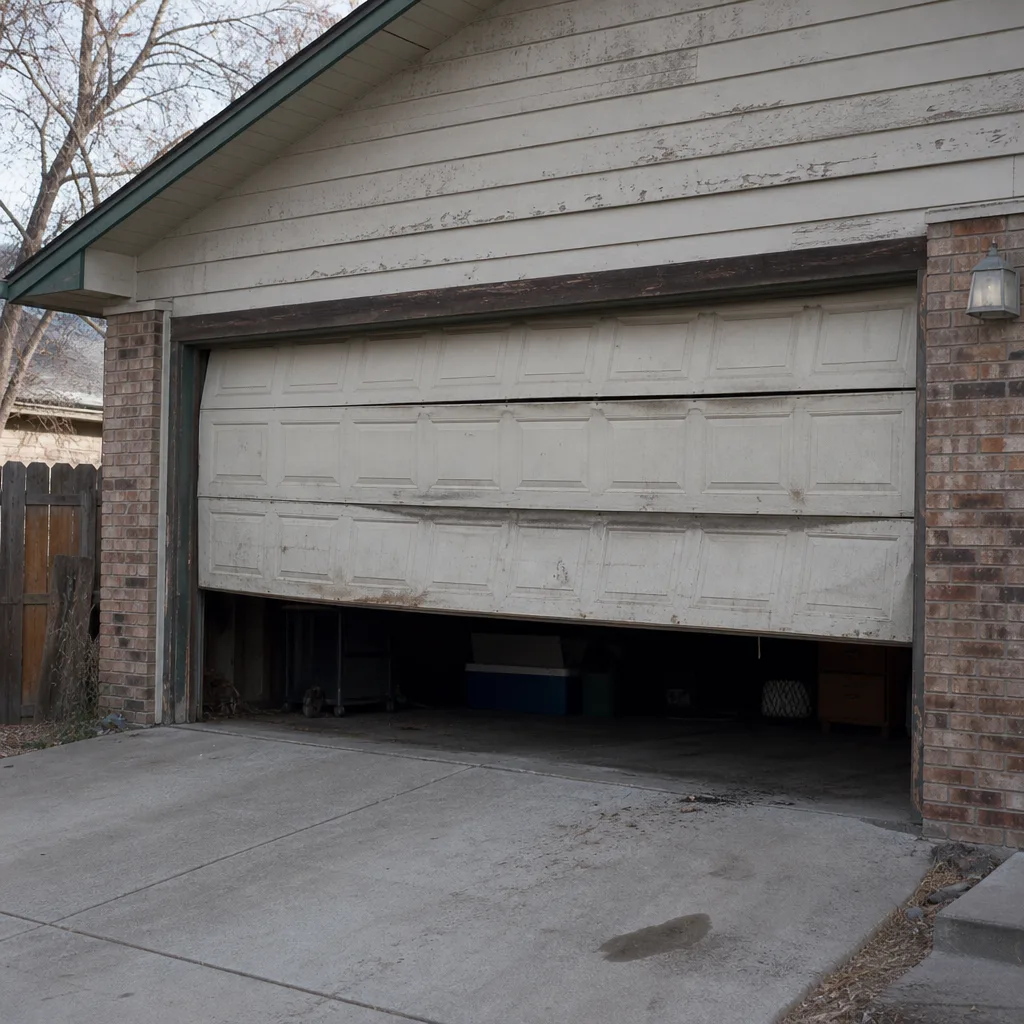
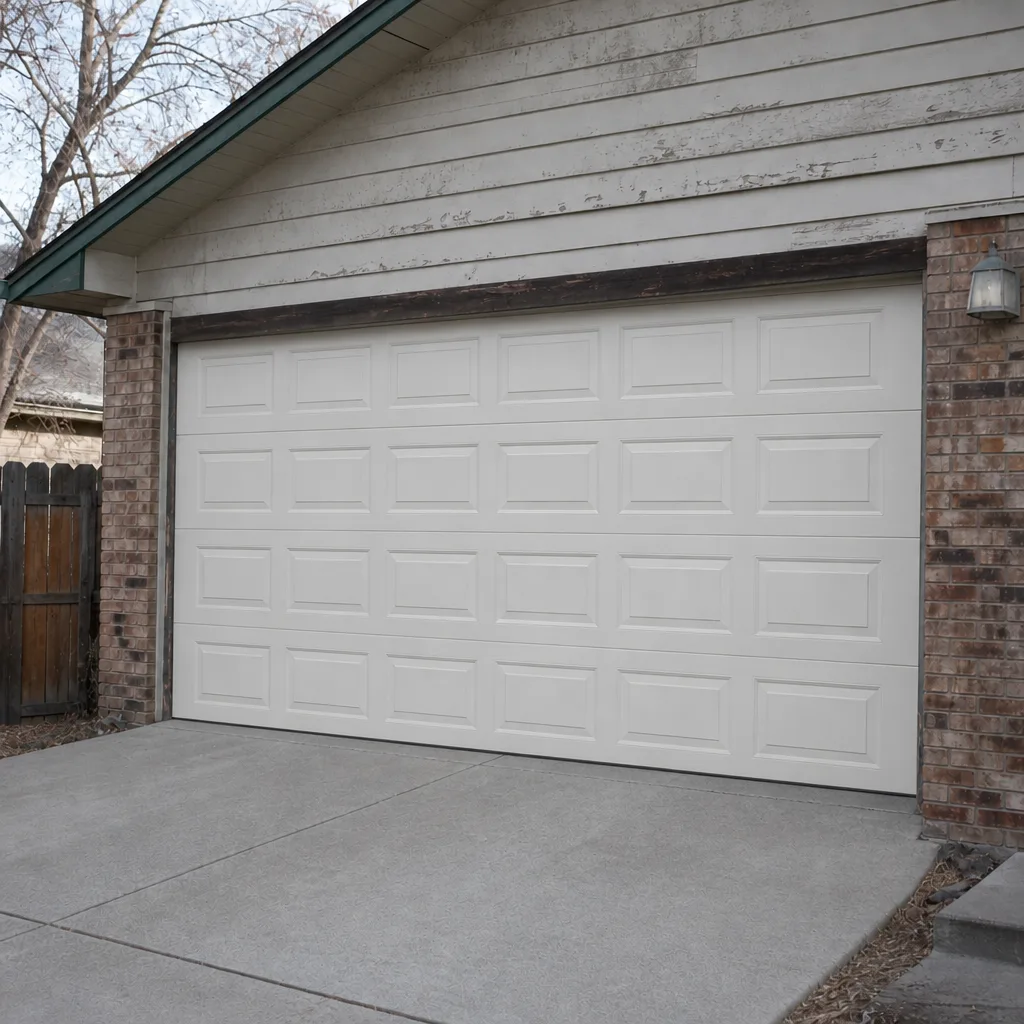
See the difference
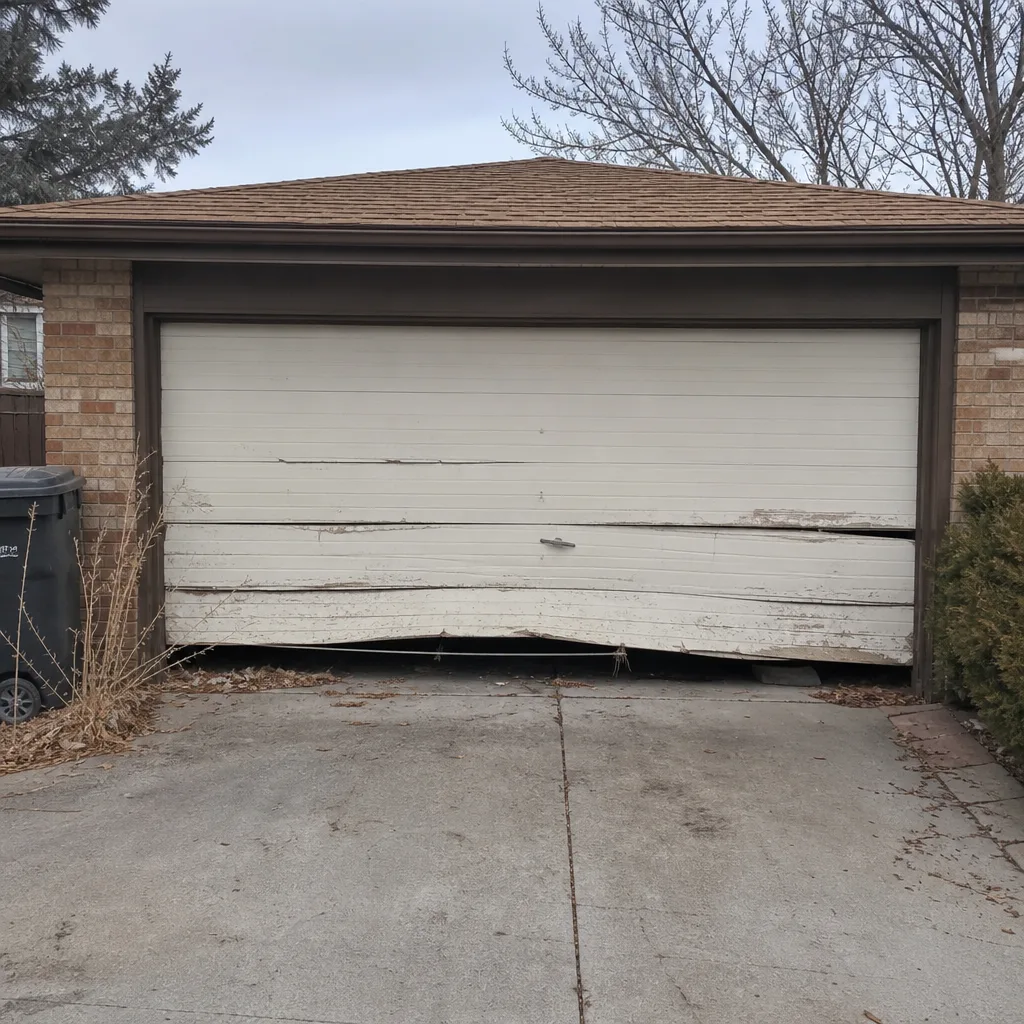 Before
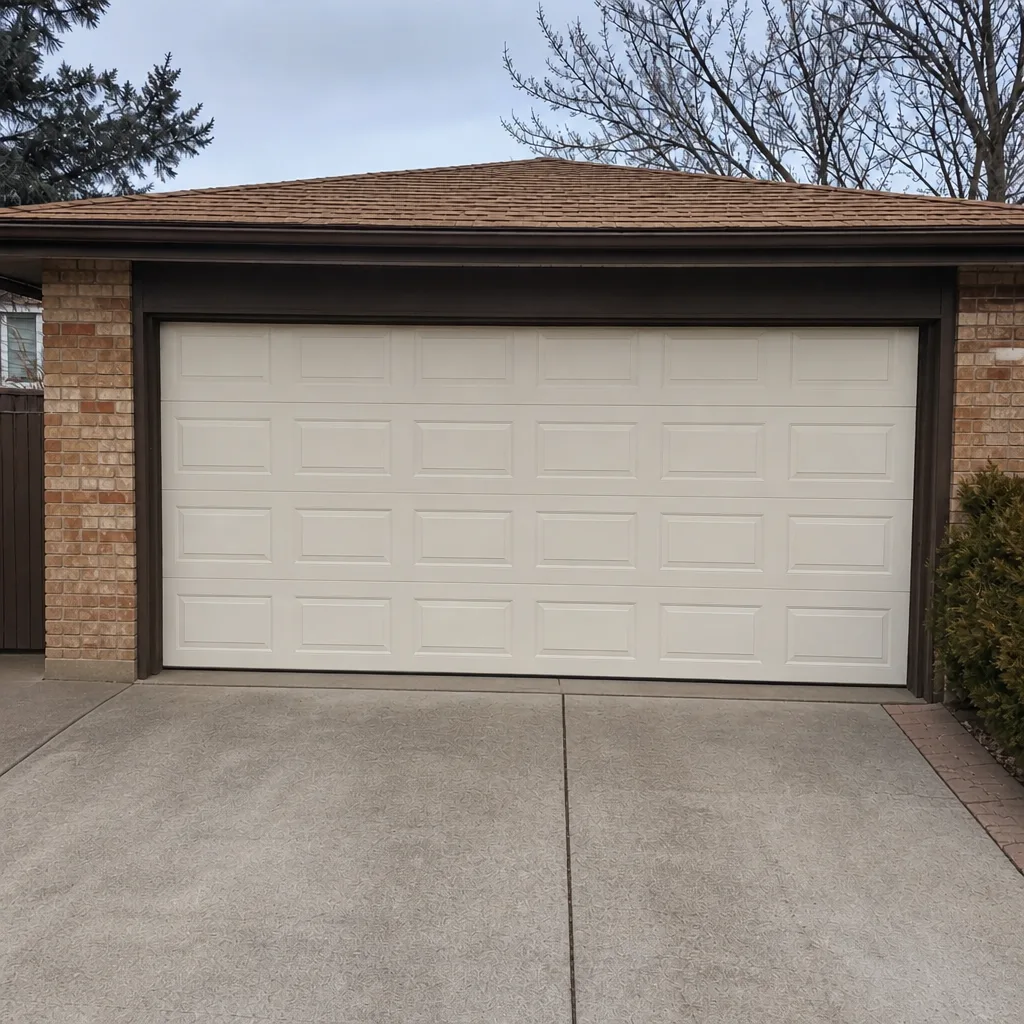 After
 Before
 After
 Before
 After
Common Mistakes to Avoid
- Treating a broken spring like a DIY job. Torsion springs are under serious tension, and a snapped spring can snap back and injure you. Call a professional – this is one of the highest-risk jobs on a garage door.
- Ignoring the balance test because the door “still works.” A door that runs is not necessarily balanced. Running an unbalanced door wears out the opener and accelerates cable and roller failure.
- Running a door that’s off its tracks. If the door is visibly crooked or a roller has come out, running it will bend the track and twist the panels. Stop and call for service.
- Closing a door on a reversed safety sensor. If the door reverses on its own or doesn’t reverse when the sensor beam is broken, that’s a safety failure, not a convenience quirk.
- Assuming cold-morning sluggishness is always temperature. In Longmont, a door that stays sluggish all day is a problem to fix, not a seasonal nuisance to wait out.
- Replacing an opener before checking the balance. A new motor on an unbalanced door wears out prematurely and won’t solve the underlying issue.
- Skipping a bottom seal replacement because the gap is small. A small gap becomes a rusted panel after one winter of meltwater sitting against the door frame.
- Letting a small rattle or squeak go unchecked. Every season of unaddressed noise wears down rollers, hinges, and openers a little farther. A small fix now is almost always smaller than the fix later.
When to Call a Professional
Call a professional if any of these match your situation: a spring you can see is broken, a cable that’s snapped or frayed, a door that’s come off its tracks or hangs crooked, a door that reverses on its own, an opener that’s straining or making new noises, or a balance-test failure. Any of those is a stop-using-immediately item and you shouldn’t touch the door until someone trained has looked at it. The minor-tier signs – a squeak, a rattle, one sluggish morning – are safe to schedule this week, and we’d rather diagnose those before they turn into something worse. We handle the full spectrum from a single roller swap to a garage door installation, and our technicians have up to 15 years of experience working on Genie, Clopay, Amarr, Wayne Dalton, and the smart-openers homeowners actually own. Longmont Garage Door Repair Pros offers free estimates in Longmont – call (888) 574-5680.
Frequently Asked Questions
A loud bang followed by a door that won’t lift is the most urgent sign – it usually means a broken spring, and the door should not be used until a professional looks at it. A door that’s off its tracks or hanging crooked is right behind it, and running either one makes the damage worse. Call (888) 574-5680 and we’ll triage it over the phone.
If the noise is a sharp bang from above the door and the door goes dead afterward, it’s almost always a spring – stop using the door. If the noise whines, grinds, or strains from the unit on the ceiling, it’s the opener. Call (888) 574-5680 for an exact diagnosis and free estimate.
It’s normal for the door to feel slightly sluggish on the very first cycle of a sub-freezing morning. It’s not normal if the door stays sluggish all day, hesitates in the same spot, or the opener strains – those are mechanical issues, not the cold. If it doesn’t improve by the second cycle, call (888) 574-5680.
Most residential doors benefit from a professional service once a year – spring tension inspected, rollers and hinges lubricated, balance checked, safety sensors tested. Doors in Longmont that face wind-driven snow and hard freezes may benefit from a second look at the start of the cold season. Call (888) 574-5680 to book a free estimate.
Yes, as long as the door is visibly in good shape and no spring is broken or cable is loose. Disconnect the opener, lift the door to mid-height, and let go – it should stay where you released it. If it sinks, slams, or rides up on its own, stop and call (888) 574-5680; the door needs an adjustment.
The price you’re quoted is the price you pay – the written estimate sets the final price. We diagnose the door before quoting, so any tier-three issue is already reflected in the quote. Call (888) 574-5680 for a free estimate.
The Bottom Line
Warning signs are only useful if you know which ones mean “watch it” and which mean “stop.” The short version of this guide: squeaks and rattles are watch-it; loose hardware, seal gaps, opener strain, and an unbalanced door are book-it-this-week; a broken spring, snapped cable, door off its track, or a door that reverses on its own is stop-immediately. Sort every new noise or fault into one of those three tiers and your garage door will never surprise you in the middle of a cold Longmont morning. Our team at Longmont Garage Door Repair Pros is here to help you sort it out. Call (888) 574-5680 for a free estimate. We answer 24/7. Fast dispatch from 7am to 7pm, Sunday through Friday.
Written by the team at Longmont Garage Door Repair Pros.